
Choose and Inspect Before You Climb
A Ladder Is an Access Tool, Not a Default
A ladder is appropriate only when the task is short, light-duty, and can be completed without overreaching. For aerial plant work, choose the method that keeps the technician stable and keeps both hands available: a bucket truck, scaffold, or other approved access method may be safer than a ladder.
Match material to the hazard. Fiberglass is the default around possible electrical exposure; metal ladders can conduct electricity and must never be used where power contact is possible. A fiberglass ladder that is wet, contaminated, cracked, or has exposed fibers is not automatically electrically safe—follow the manufacturer and company inspection rules.
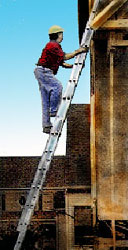
Use this as a visual review; company procedures and the ladder manufacturer’s instructions control the work.
Pre-use inspection — stop if any item fails
- Rails and rungs
- No cracks, bends, splits, corrosion, loose rungs, sharp edges, or exposed fiberglass fibers.
- Feet and shoes
- Both non-slip feet present and gripping; no worn, oily, muddy, or missing pads.
- Hardware
- Locks/hooks fully engage; spreaders, rivets, rope, pulley, and fasteners work as designed.
- Labels
- Duty rating, warnings, and operating labels remain readable; do not use an unlabeled or altered ladder.
- Contamination
- Remove oil, mud, wet paint, ice, or other slip hazards. Do not use if it cannot be made clean and dry.
- Disposition
- Tag and remove a defective ladder from service; do not field-repair rails or substitute improvised parts.
Treat overhead power and communication cables as energized until the utility confirms otherwise. Keep the ladder, your body, tools, and materials outside required clearance. If clearance is uncertain, stop and escalate—do not move or tie a ladder near the hazard.