
Plan the Work Zone & Inspect the Lift
Only a Trained, Authorized Operator
A bucket truck is a vehicle-mounted aerial lift, not simply a ladder with hydraulics. The operator must be trained, authorized, and familiar with the specific unit’s controls, placards, capacity, lower controls, emergency descent, insulation limits, and manufacturer instructions. A new model, changed work conditions, observed misuse, or an incident can trigger retraining.
The pre-job briefing must identify the work, access path, power exposure, ground conditions, traffic plan, weather limits, communication method, and emergency/rescue plan. If any condition changes—such as wind rising, a utility line entering the work envelope, or a soft outrigger pad—pause and reassess.
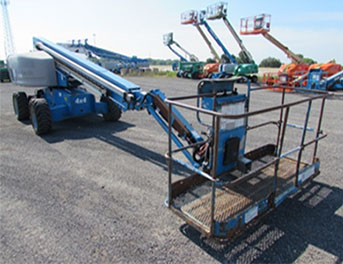
Review inspection points against the specific truck’s manual, placards, and your employer’s daily inspection form.
Daily pre-start inspection
- Truck
- Check tires, wheels, fluid levels/leaks, battery, steering, brakes, horn, gauges, lights, backup alarm, and visible damage.
- Lift
- Check upper and lower/emergency controls, hydraulics, hoses, wiring, pins, fasteners, boom/fiberglass components, guardrails, gates, and placards.
- Stabilizers
- Inspect outriggers, pads, interlocks, locks, and warning indicators. Do not use a damaged or leaking system.
- Functional test
- Perform required ground and bucket-control tests in a clear area before lifting personnel; test emergency/lower controls per the manual.
- Traffic-control minimum
- Company rule: stage at least 1 cone for each 10 mph of posted speed for the taper—50 mph = 5 cones. This is a minimum count, not a substitute for the approved temporary-traffic-control plan.
- Defects
- Stop, tag out, and report defective equipment. A defect is not cleared by working around it or relying on a coworker to watch it.
Work-zone setup before elevation
- 1Survey for overhead conductors, communication lines, tree limbs, roofs, signs, and pinch/crush points through the entire boom path—not only at the work point.
- 2Assess ground for slopes, drop-offs, trenches, vaults, soft shoulders, uncompacted fill, curbs, and overhead traffic. Position only on surfaces approved by the manufacturer.
- 3Set traffic control: cones, signs, lane closure, spotter, and a clear exclusion zone as required by the site plan and local rules. Protect the boom’s swing and the area below the bucket.
- 4Apply the company cone-count minimum: 1 cone per 10 mph of posted speed in the taper (for example, 5 cones at 50 mph). Space and taper them under the approved traffic-control plan; national MUTCD guidance limits taper device spacing to the posted speed in feet and tangent spacing to twice the posted speed in feet.
- 5Park, set parking brake, and deploy wheel chocks and outriggers/stabilizers exactly as the manufacturer requires. Use proper outrigger pads on firm support—never stacked scraps or unstable cribbing.
- 6Verify total platform load: people, harnesses, tools, material, and attachments. Keep within the marked capacity and never use the lift as a crane.
Outriggers near trenches, soft shoulders, vaults, or recently disturbed soil can sink or shift. If ground condition is questionable, stop and obtain an approved setup plan—do not 'test it' with a raised boom.