
Bridger Role & Device Comparison
Bridger Role in the Cascade
A mini bridger (distribution amplifier) accepts one trunk input and feeds multiple amplified outbound legs — each port carries engineered trunk level for its tap string or sub-feeder.
Bridgers appear where cascade splits geographically — multiple tap highways, apartment complexes, or parallel legs avoiding long through-loss tap strings.
LE: single through IN→OUT with gain. Bridger: one IN, multiple amplified OUTs (2–4 typical). 'Booster' in legacy docs — verify housing label and map symbol.
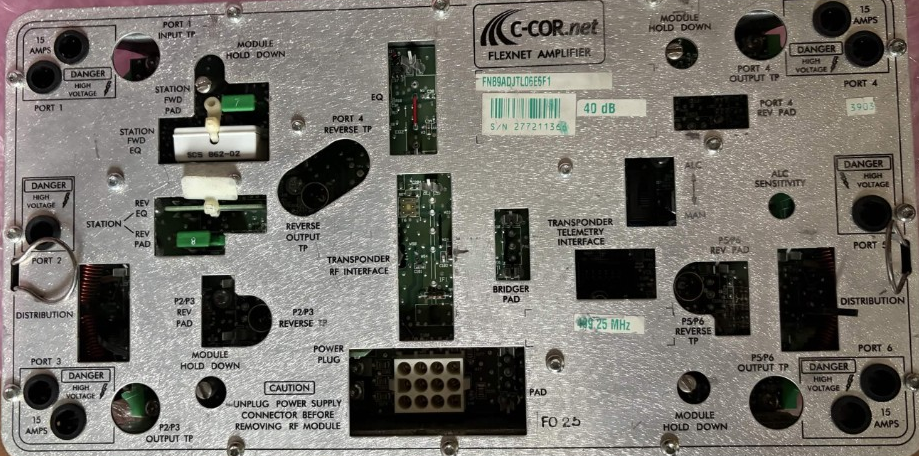
Device comparison
- Line extender
- Single through trunk amp; IN/OUT cascade
- Mini bridger
- Multi-output distribution amp; splits cascade legs
- Booster (legacy)
- Verify label — often distribution or second-stage trunk amp
- Node
- Fiber/RF boundary — not a bridger
- Tap
- Passive coupler — no gain
Multi-Port Outputs
Each output has target level and load based on tap string design. Extra splitters or field-added taps on one leg drop that leg only — other legs may appear fine.
Unused bridger outputs must be terminated with 75 Ω on trunk ports. Port silkscreen indicates power-passing capability — only designated ports pass DC to downstream amps on that leg.
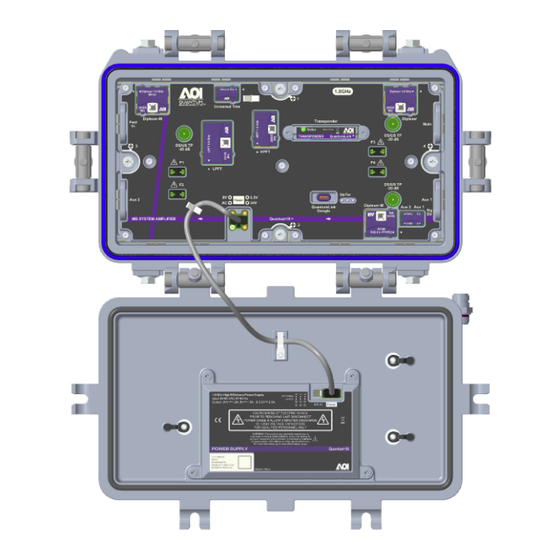
Multi-port amps pass DC only on designated ports. Feeding power out a non-power port — or isolating a power leg with wrong passive — damages modules or darks downstream amps. Match silkscreen and engineering diagram exactly.